
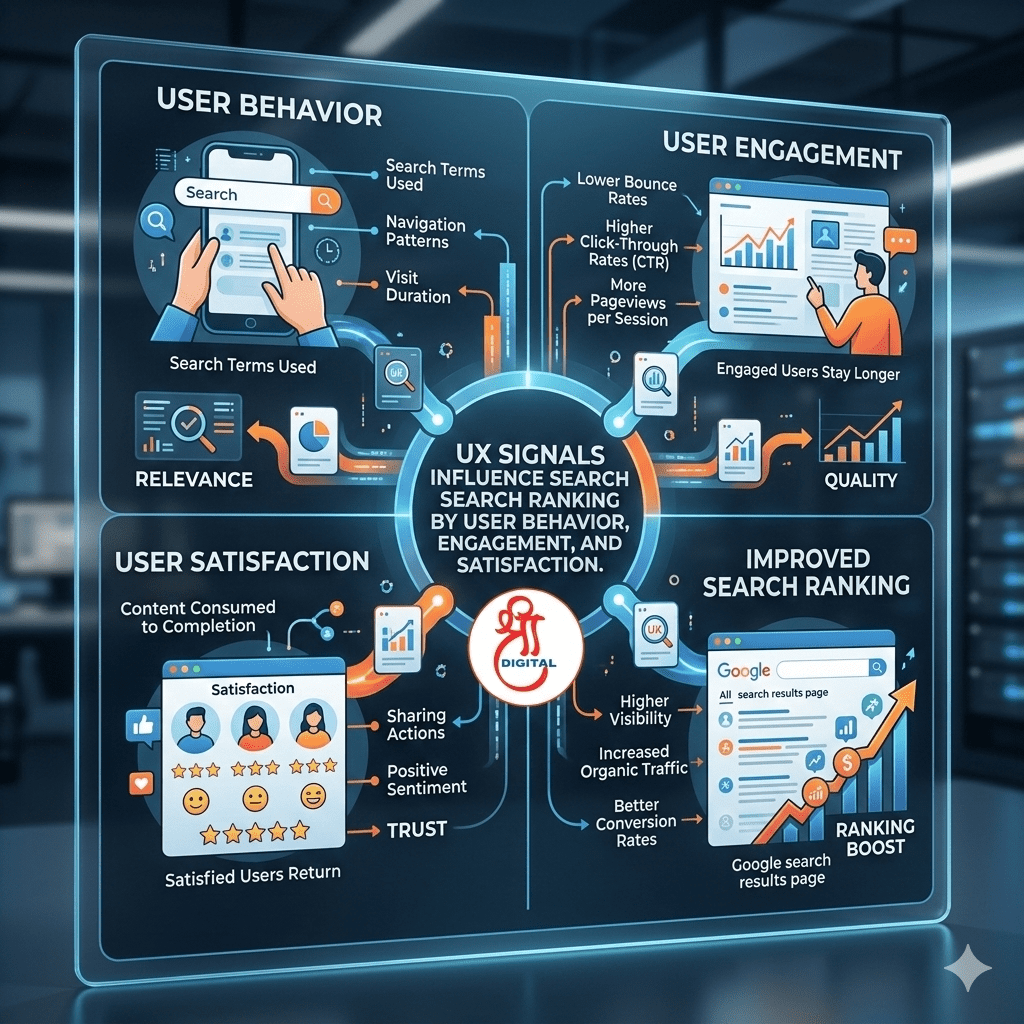
UX optimization for search Search engines constantly improve to give users the most relevant results. Earlier, websites ranked mainly by keywords and backlinks. Today, however, UX signals are crucial for SEO. They reveal how visitors interact with a website, how engaged they remain, and whether they are satisfied with the content.
When the user experience is positive, search engines reward the website with higher rankings. This article explains UX signals in simple terms. Additionally, practical tips to improve them for better SEO are provided.
Many businesses offering Affordable Digital Marketing Services in Meerut focus on UX signals because these metrics directly impact search performance.
–> Boost your online growth with Shri Digital, your trusted partner for performance-driven marketing and complete eCommerce solutions
What Are UX Signals?
UX, or user experience, refers to how people interact with a website. UX signals track this interaction and show search engines how satisfied visitors are. Analytics tools usually measure these metrics.
Common UX signals include:
Bounce rate
Dwell time
Click-through rate (CTR)
Pages per session
Scroll depth
Strong UX signals often indicate that a website is easy to navigate, useful, and engaging. For example, companies providing Best SEO services in Meerut monitor these metrics to improve their search rankings.
How UX Signals Affect Search Rankings
Search engines aim to deliver helpful results. Therefore, websites that are engaging and valuable often rank higher.
Positive UX signals influence rankings in several ways:
Lower bounce rates suggest visitors find the content useful.
Longer dwell time shows users read and interact with pages.
Higher pages per session indicate the website is easy to navigate.
Many businesses work with a Best SEO Expert in Meerut to optimize these metrics and improve visibility.
Key UX Signals That Influence SEO
1. Bounce Rate
Bounce rate measures the percentage of visitors who leave after viewing a single page.
A high bounce rate can indicate irrelevant or unengaging content. Conversely, a low bounce rate shows users explore multiple pages.
To reduce bounce rate:
Provide high-quality and useful content
Make pages readable with clean design
Use headings and bullet points
Companies offering Lead Generation Services in Meerut focus on reducing bounce rates to keep potential customers engaged longer.
2. Dwell Time UX optimization for search
Dwell time tracks how long a visitor stays on a page before returning to search results.
Long dwell time indicates that users find the content interesting. Short dwell time may mean the page does not meet user expectations.
Ways to improve dwell time:
Structure content for easy reading
Include images, videos, or infographics
Make information clear and concise
Businesses providing Online Marketing Services in Meerut analyze dwell time to ensure pages satisfy user intent effectively.
3. Click-Through Rate (CTR)
CTR measures how many users click a website link after seeing it in search results.
A higher CTR is a positive UX signal. It shows that titles and descriptions are relevant and attractive.
Tips to improve CTR:
Write clear and engaging titles
Optimize meta descriptions
Add structured data and rich snippets
Many companies consult a Google Ads Expert in Meerut to improve CTR and increase traffic from search results.
4. Pages Per Session UX optimization for search
Pages per session track the number of pages a visitor views in one visit.
Higher pages per session indicate an engaging and organized website. Internal linking helps users navigate easily.
For example, blog posts can link to related articles, encouraging further exploration.
Businesses working with the Best Digital Marketing Agency in Meerut often implement internal linking strategies to boost engagement.
5. Scroll Depth UX optimization for search
Scroll depth measures how far users scroll down a page.
If visitors reach the bottom, it shows high engagement. Shallow scrolling may suggest the content is not interesting or readable.
To increase scroll depth:
Break content into sections with subheadings
Use short paragraphs
Add visuals like images, videos, or charts
This ensures visitors stay longer and interact more with the website.
Why UX Signals Matter for SEO
Search engines aim to deliver results that satisfy users. UX signals indicate whether a website is helpful, engaging, and easy to navigate.
Positive UX signals can lead to:
Higher rankings in search results
Increased organic traffic
Better engagement and satisfaction
Higher conversions and leads
On the other hand, poor UX signals may reduce rankings and traffic. Therefore, businesses should prioritize UX in modern SEO strategies.
How to Improve UX Signals
To enhance UX signals, focus on user experience:
Provide high-quality and useful content
Optimize page speed for faster loading
Use simple and clear navigation
Ensure mobile-friendly design
Implement internal linking to guide users
When these steps are applied, engagement usually improves, positively affecting search rankings.
Conclusion
UX signals are essential in modern SEO. Metrics like bounce rate, dwell time, CTR, pages per session, and scroll depth reveal how users interact with a website.
Websites with strong UX signals are rewarded by search engines with higher rankings. Therefore, focusing on user behavior, engagement, and satisfaction is critical for SEO success.
By optimizing UX signals, businesses can create better experiences for visitors and achieve long-term growth in search visibility.