
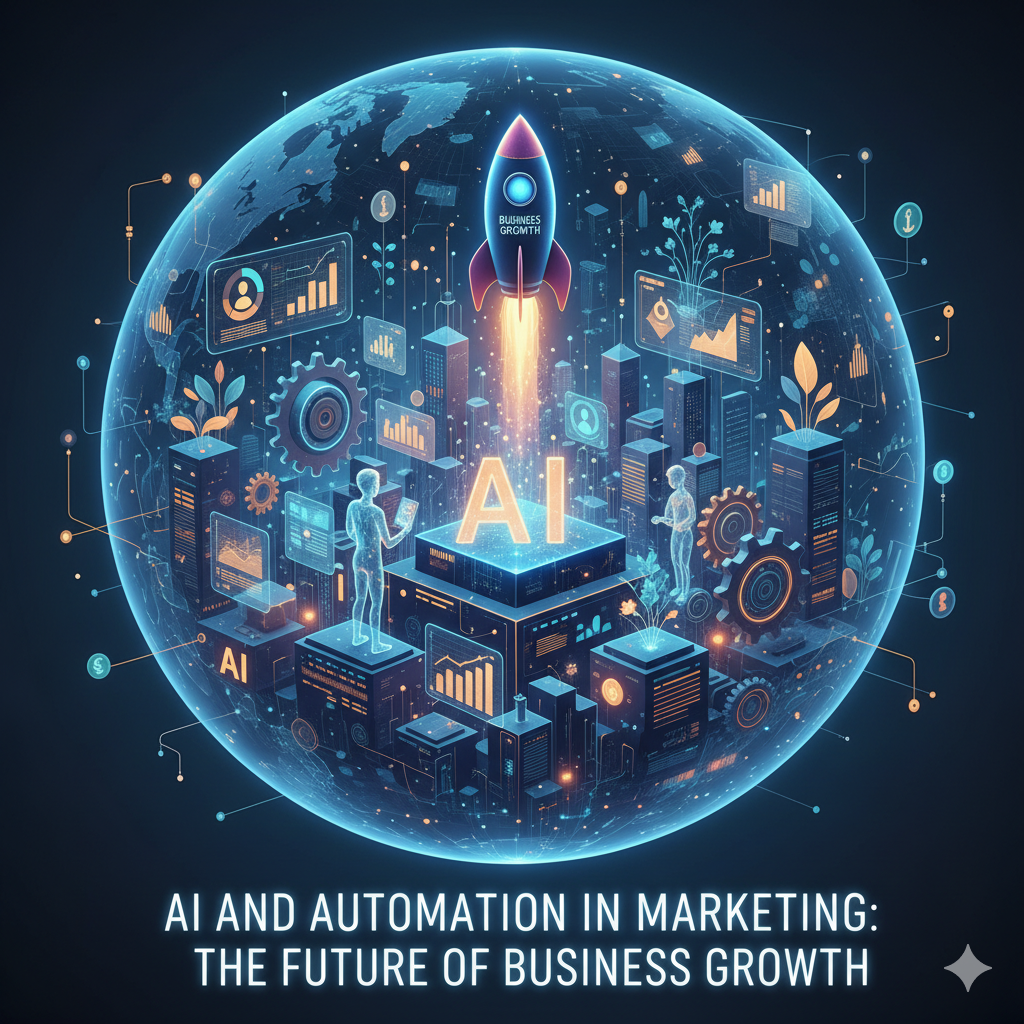
The marketing landscape is changing faster than ever, and much of that transformation is driven by AI and Automation in Marketing. What once required large teams, manual effort, and endless spreadsheets can now be streamlined, personalized, and scaled with the help of intelligent technologies. From data-driven customer insights to predictive analytics and automated content creation, AI is redefining how businesses grow and compete in the digital age.
In this post, we’ll explore how the best digital marketing agency in Meerut and other forward-thinking businesses are using AI and automation to reshape marketing, why these technologies are essential for future growth, and how companies can leverage them to gain a lasting competitive edge.
For expert guidance on leveraging AI and automation for your marketing success, visit Shri Digital — the best digital marketing agency in Meerut helping businesses grow smarter and faster.
1. The Rise of AI-Powered Marketing
Over the last decade, marketing has evolved from intuition-based decision-making to data-driven strategy. But even data, on its own, is overwhelming — the average marketer handles millions of data points daily from customer interactions, social media, ads, and analytics. This is where AI and Automation in Marketing step in, transforming complex data into actionable insights that help businesses make smarter, faster, and more effective decisions.
AI algorithms can analyze massive amounts of data at speeds no human team could match. They identify patterns, predict behavior, and help marketers make smarter, faster decisions. Whether it’s determining which ad copy performs best or predicting which leads are most likely to convert, AI gives marketers clarity amid the chaos.
Today, tools like Google Ads Smart Bidding, HubSpot’s AI content assistants, and Salesforce Einstein show how embedded AI is in modern marketing stacks. These systems not only recommend next steps but autonomously execute them — optimizing ad spend, improving conversion rates, and enhancing the customer journey.
2. Automation: Doing More With Less
If AI is the brain, automation is the muscle of modern marketing. Automation turns insights into action — automatically sending emails, scheduling social posts, segmenting customers, and managing campaigns across channels.
Marketing automation platforms such as Marketo, ActiveCampaign, and Mailchimp allow teams to nurture leads with precision timing and personalization. For instance, if a potential customer visits a pricing page but doesn’t purchase, automation can trigger a follow-up email, a targeted ad, or even a chatbot conversation.
This type of automated, contextual engagement ensures no lead slips through the cracks, and every prospect receives relevant communication — all without constant manual oversight. That’s why the best digital marketing agency in Meerut leverages these advanced tools to build stronger customer relationships and maximize marketing efficiency.
3. Hyper-Personalization Through AI
Consumers today expect more than generic marketing messages. They want personalized experiences that speak directly to their needs and preferences. AI and Automation in Marketing make this possible at scale, enabling brands to deliver tailored content, offers, and experiences that truly resonate with each customer.
Using machine learning and predictive analytics, AI can analyze individual user behavior to deliver the right message, at the right time, through the right channel. This is the foundation of hyper-personalization — a marketing approach that dynamically adapts content for each customer.
For example, Netflix uses AI to recommend shows based on viewing patterns, while Amazon’s recommendation engine drives nearly 35% of its total sales. Similarly, AI-powered email platforms tailor subject lines, send times, and offers to individual users, improving open rates and conversions.
The result? A better customer experience, stronger relationships, and higher lifetime value — all fueled by automation and intelligence.
4. Predictive Analytics: The Future of Marketing Decisions
One of AI’s most powerful applications in marketing is predictive analytics — the ability to forecast future trends based on historical data. Predictive models can help marketers anticipate customer behavior, identify churn risks, and allocate resources more efficiently.
For example:
Lead Scoring: AI predicts which leads are most likely to convert, enabling sales teams to focus on high-value prospects.
Demand Forecasting: Retailers can forecast demand for products, optimizing inventory and ad spend.
Customer Retention: By analyzing engagement data, AI can flag at-risk customers early and trigger retention campaigns.
This forward-looking capability shifts marketing from reactive to proactive — empowering businesses to stay one step ahead of market trends. The best digital marketing agency in Meerut utilizes these predictive insights to craft smarter campaigns, anticipate customer needs, and maintain a competitive advantage in an ever-evolving marketplace.
5. Chatbots and Conversational AI: Always-On Engagement
The rise of conversational AI is transforming how brands communicate. AI-powered chatbots, powered by natural language processing (NLP), can engage customers 24/7 — answering questions, qualifying leads, and guiding purchases.
Platforms like Drift, Intercom, and Zendesk are redefining customer service and sales by blending automation with human-like interactions. These systems don’t just respond to queries; they learn from every conversation, improving over time.
For businesses, this means better engagement, faster response times, and reduced operational costs — all key drivers of growth.
6. Ethical and Strategic Considerations
While the potential of AI and automation is immense, businesses must also approach it responsibly. Concerns around data privacy, bias in algorithms, and over-reliance on automation are valid and growing. Transparency and ethical AI usage are essential for maintaining trust.
Moreover, AI should augment, not replace, human creativity. The most successful marketing strategies combine machine efficiency with human empathy — blending data-driven insights with authentic storytelling. The best digital marketing agency in Meerut embraces this balance, using AI to enhance creative campaigns while keeping the human touch at the heart of every marketing effort.
7. Preparing for the Future
As AI continues to evolve, the marketers who thrive will be those who adapt early and think strategically. Here are a few practical steps for future-proofing your marketing strategy:
Invest in data literacy: Ensure your team understands how to interpret and apply AI-driven insights.
Adopt scalable tools: Start small with automation — such as email workflows — and scale as you learn.
Prioritize personalization: Use AI to tailor experiences, not just automate tasks.
Stay ethical and transparent: Protect customer data and communicate clearly how AI is used.
AI and automation aren’t just trends — they’re the new foundation of digital marketing. Businesses that harness these tools effectively will see not only increased efficiency but also deeper customer relationships and sustainable growth.
Final Thoughts
The future of marketing is intelligent, automated, and deeply personalized. AI enables marketers to understand customers like never before, while automation ensures that insights turn into impactful action. Together, they create a powerful synergy that drives efficiency, innovation, and growth.
As we move into a new era of business, one thing is clear: companies that embrace AI and automation today are setting the stage for tomorrow’s success.