
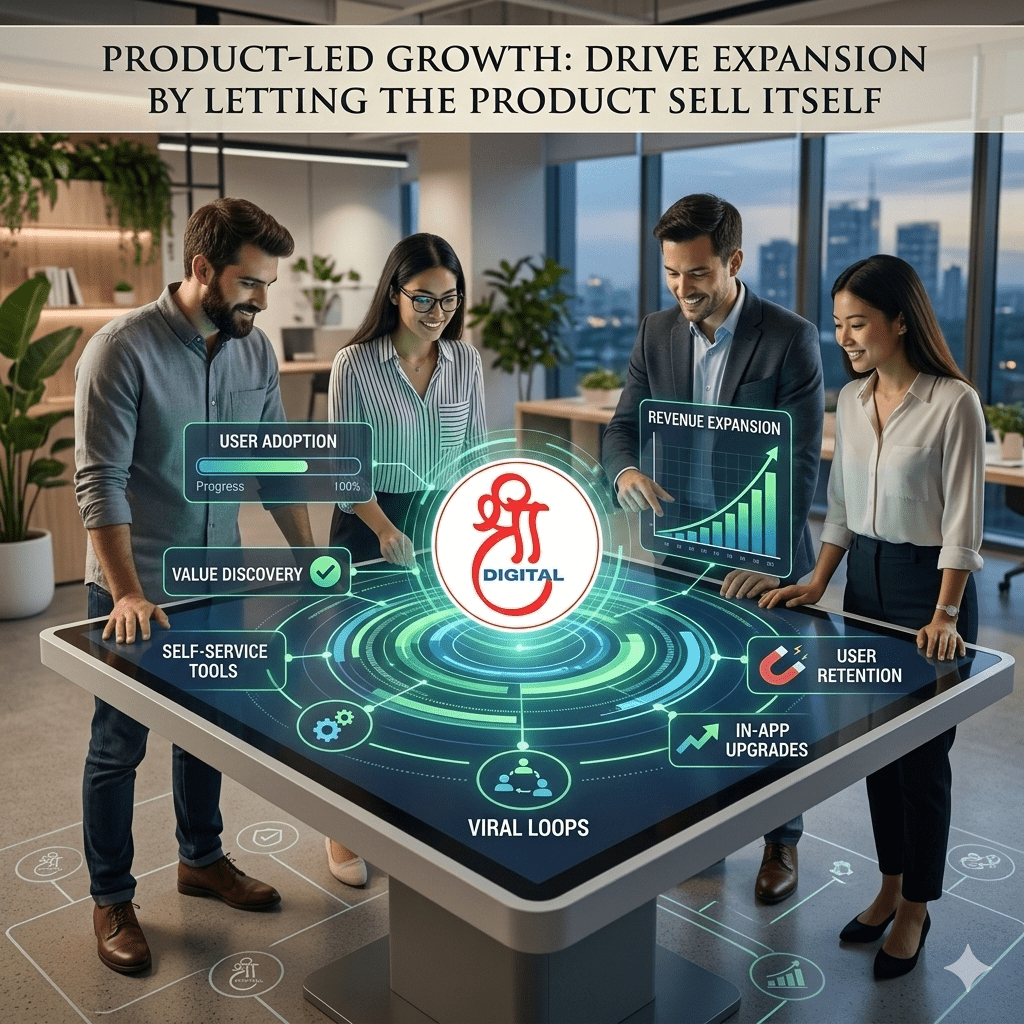
User centric growth model In today’s fast-changing business world, growth strategies are evolving. Traditional methods like aggressive sales pitches or expensive advertising campaigns are often not enough. Increasingly, companies are adopting product-led growth (PLG) to expand their business. This approach relies on the product itself as the main driver of growth. Instead of heavily depending on marketing or sales teams, the product demonstrates its value to users, naturally encouraging adoption, retention, and expansion.
In this article, we will explore what product-led growth is, how it works, and why businesses around the world, including those offering Affordable Digital Marketing Services in Meerut, are embracing this strategy.
–> Boost your online growth with Shri Digital, your trusted partner for performance-driven marketing and complete eCommerce solutions
What Is Product-Led Growth?
Product-led growth is a business strategy where the product drives customer acquisition, retention, and expansion. Simply put, the product “sells itself.” When users experience its value first-hand, they are more likely to continue using it, recommend it to others, and upgrade to premium versions.
Unlike traditional marketing-led or sales-led strategies, PLG emphasizes creating an exceptional user experience. If the product is intuitive, valuable, and engaging, users naturally become promoters.
Even businesses providing Online Marketing Services in Meerut can adopt PLG. By letting potential clients explore tools, dashboards, or analytics platforms for free, they can demonstrate real value without relying solely on external advertising.
How Product-Led Growth Works
The PLG strategy relies on several key principles:
Self-Service Onboarding: Users should start using the product easily without needing guidance from a salesperson. A smooth onboarding experience reduces friction and boosts adoption.
Freemium or Trial Versions: Providing free access to basic features lets users test the product before committing financially.
User-Centric Design: The product must be simple, intuitive, and helpful. A satisfying user experience keeps users engaged.
Built-In Virality: Many PLG products encourage sharing, collaboration, or team usage, naturally driving expansion.
For example, companies offering Lead Generation Services in Meerut can allow clients to try lead tracking tools or demo dashboards. Experiencing results firsthand encourages them to upgrade to premium services.
Benefits of Product-Led Growth
Adopting a PLG strategy offers numerous advantages:
1. Lower Customer Acquisition Costs
Because the product itself drives adoption, companies can reduce spending on large sales teams or expensive advertising campaigns. Users discover the product organically and share it with others.
2. Higher Retention Rates
PLG emphasizes creating a product users love. When customers see clear value, they are more likely to continue using it and upgrade to paid plans.
Marketing professionals, including a Best SEO Expert in Meerut, often note that combining a strong product experience with strategic SEO can amplify growth and retention.
3. Faster Expansion
Satisfied users often bring in more users through referrals, collaboration, or word-of-mouth, leading to rapid business expansion.
4. Stronger Customer Trust
Users who discover value independently through the product naturally build trust in the brand. This transparency encourages long-term loyalty.
A Best Digital Marketing Agency in Meerut can leverage PLG in its own tools and platforms, allowing clients to experience value firsthand rather than relying solely on promotional campaigns.
Examples of Product-Led Growth User centric growth model
Several well-known companies successfully use PLG:
Slack: Users can sign up, invite teammates, and start using the product immediately. Collaboration encourages natural expansion.
Dropbox: Offers free storage initially and rewards referrals, driving viral growth.
Zoom: Free video meetings let users experience value before considering paid upgrades.
Similarly, businesses offering Google Ads Expert in Meerut services can implement PLG by allowing clients to test ad optimization tools or dashboards before committing to paid campaigns
Implementing Product-Led Growth
Businesses can take practical steps to adopt PLG effectively:
Identify Core Value: Highlight the feature that solves the user’s main problem.
Simplify Onboarding: Make it easy for users to start using the product immediately.
Offer Freemium or Trials: Allow users to experience the product risk-free.
Collect Feedback: Continuously monitor user interaction and improve the product.
Encourage Sharing: Add features that promote collaboration, referrals, or team usage.
Even companies providing Best SEO Services in Meerut can use PLG by offering free tools, website audits, or analytics dashboards, allowing clients to see real results before purchasing additional services.
Challenges of Product-Led Growth User centric growth model
While PLG offers significant benefits, challenges exist:
Product Quality Must Be High: The product must deliver clear value from the start.
Initial Awareness Is Needed: Some marketing is still required to reach the first users.
Scalability: Supporting large numbers of free users requires strong infrastructure and support.
Businesses providing Affordable Digital Marketing Services in Meerut need to ensure that free features deliver value while scaling efficiently.
Conclusion
Product-led growth is reshaping how businesses expand. By letting the product sell itself, companies can lower acquisition costs, increase retention, accelerate growth, and build stronger customer trust.
For modern businesses, including those offering Online Marketing Services in Meerut or Lead Generation Services in Meerut, adopting PLG can be transformative. When users experience real value through the product, they naturally become loyal customers and advocates.
The key is simple: create a product that solves problems, delights users, and grows naturally. When executed well, product-led growth drives sustainable success without relying solely on traditional sales or marketing methods.