
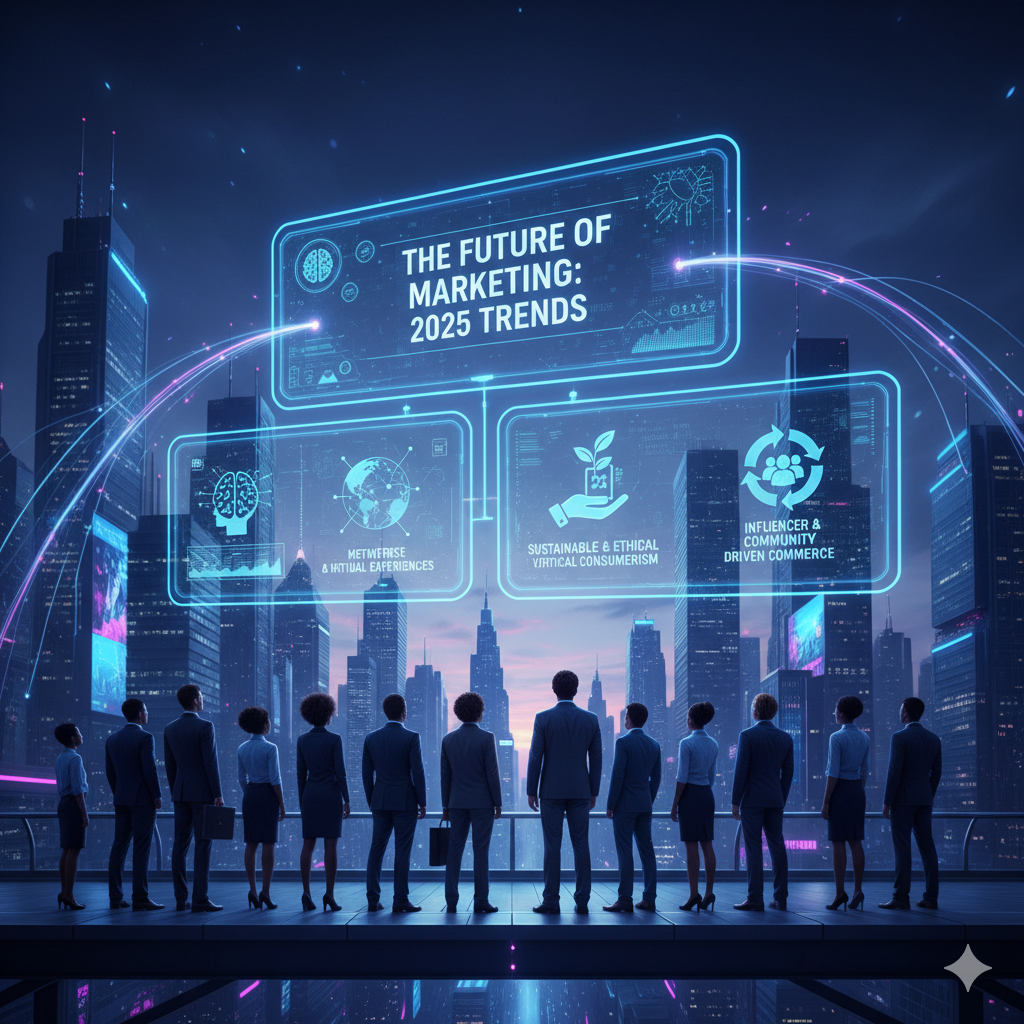
As we move deeper into 2025, marketing is no longer just about catchy taglines, big budgets, or mass reach. The landscape is evolving rapidly, shaped by advancing technology, shifting consumer expectations, and growing demands for ethics and authenticity. For businesses of all sizes, staying ahead means embracing new tools, new ways of thinking, and new measures of value. Understanding the latest marketing trends 2025 can help companies adapt, innovate, and build stronger connections with their audiences in an increasingly competitive digital world.
Looking to elevate your brand with cutting-edge strategies? Visit Shri Digital — the best digital marketing agency in Meerut, specializing in SEO, social media marketing, and performance-driven digital growth solutions.
1. AI as Core, Not Accessory
Artificial intelligence has been creeping into marketing for several years, but in 2025 it solidifies its place as a foundational tool rather than a “nice-to-have.” From predictive analytics that anticipate what customers will want to generative content tools that create marketing copy, images, or even videos at scale, the role of AI is expanding rapidly. Among the key marketing trends 2025, AI stands out as the driving force behind smarter decision-making, hyper-personalization, and improved customer experiences that shape the future of digital marketing.
Key implications:
Hyper-personalization — content, offers, and experiences tailored almost in real time to individual behavior.
Automation + efficiency — repetitive tasks like content scheduling, A/B testing, customer support (via chatbots) will increasingly be handled by AI, freeing human teams to focus on creativity, strategy, and the human side of the brand.
Decision-making based on data — not just retrospective reporting, but forward-looking, anticipatory marketing. Predictive models that signal changing customer behavior, churn, or product interest.
2. The Rise of Immersive & Interactive Experiences
Consumers are becoming less impressed by static content. They want to experience brands, not just see them. That’s driving growth in AR (augmented reality), VR (virtual reality), and more immersive interactive content.
Some examples:
Virtual try-ons (for apparel, cosmetics etc.), or seeing furniture in your home via AR.
Interactive ads, 3D product previews, or virtual showrooms.
Metaverse and virtual spaces as platforms for brand storytelling or experiential marketing. While still emergent, some brands are experimenting here.
These immersive formats help brands stand out, boost engagement, and deepen emotional connection.
3. Video, Short-Form & Live Content Take Over
Video continues its dominance—and the shorter, more dynamic, more social, the better. Platforms like TikTok, Instagram Reels, and YouTube Shorts have already proven the power of snackable video content. In 2025, live video and interactive or shoppable videos are becoming even more central to audience engagement and conversions. Partnering with the best digital marketing agency in Meerut can help brands craft impactful short-form video strategies, leverage platform-specific trends, and build authentic connections that drive both reach and results.
Live shopping is growing: brands alongside influencers using livestreams as virtual malls where viewers can engage, ask questions, and purchase in real time.
Interactive video ads or shoppable video formats will help close the gap between awareness and purchase.
Even outside sales, video is critical in storytelling, in customer support (e.g. video FAQs), in community-building. Brands that underinvest in video risk falling behind.
4. Privacy, Data Ethics & First-Party Data
With increasing regulatory scrutiny (GDPR, CCPA, etc.), public concern about privacy, and tech platform changes (such as phasing out third-party cookies), marketers must adapt. In 2025, how you collect, use, and secure data will be as important as what you do with it.
Aspects to watch:
First-party data strategies (gathering data directly from your audience via subscriptions, loyalty programs, community, etc.).
Transparent opt-in, consent-driven marketing. Clear communication about data use.
Ethical branding and inclusivity—brands that misstep here risk backlash, especially among younger consumers.
5. Sustainability, Ethics & Brand Purpose as Non-Negotiables
Consumers—especially Millennials, Gen Z and those coming into adulthood—expect brands not just to sell, but to stand for something. Sustainability, inclusion, fairness, transparency are no longer “nice extras” but often core to how people choose which brands to trust.
Brands will need to embed environmental practices (e.g. sustainable sourcing, minimizing packaging waste, carbon labelling) into not just operations, but communication.
The storytelling around purpose must be authentic. “Greenwashing” or superficial efforts are likely to be seen through.
Social impact, ethical labor practices, diversity and inclusion in staffing and marketing content can also be differentiators.
6. Zero-Click / Platform-Native Strategies & Voice / Conversational Interfaces
The way people discover information and make purchases is rapidly shifting. Many users now find what they need without ever clicking through to traditional websites. Featured snippets in search, voice searches, answer boxes, and in-app commerce are all part of this evolving landscape. To stay visible and competitive, partnering with the best digital marketing agency in Meerut can help businesses optimize for zero-click searches, voice queries, and platform-native content strategies that keep brands relevant in 2025 and beyond.
Zero-click content: optimizing for search features like “People also ask”, “featured snippets”, knowledge panels. If your content can answer questions directly in the search engine or platform, you capture attention even without clicks.
Voice search optimization: natural language, question-based content, optimizing for how people speak, not just how they type.
Conversational marketing: chatbots, voice assistants, messaging platforms. Instant engagement, fewer friction points.
7. Community-Driven Marketing & Authentic Influence
Brand loyalty is increasingly built through genuine relationships and trust, not just empty ads. Communities—whether online forums, branded groups, or social media circles—are becoming powerful spaces for engagement, feedback, advocacy.
Micro- and nano-influencers will continue to thrive. Their smaller, more engaged audiences often translate to higher trust and better ROI.
User-generated content (UGC) becomes more central. Real people, real stories, real voices.
Brands that listen, respond, co-create with their community will have stronger staying power.
8. Integration Across Channels & Omnichannel Experiences
Because consumers move seamlessly between online and offline, desktop and mobile, social media, search, and voice channels, successful brands will be those that can orchestrate consistent, connected experiences across every touchpoint. Disjointed experiences are more noticeable—and more damaging—than ever. Collaborating with the best digital marketing agency in Meerut can help businesses build cohesive omnichannel strategies, ensuring that every customer interaction—whether online or in-store—delivers a unified brand message and a smooth, engaging experience.
Cross-platform measurement and attribution matters: understanding what parts of your marketing mix are driving value. AI can help here.
Seamless commerce: buy in app, through social media, via voice assistant, or via physical store with online support. The boundaries between shopping channels continue to blur.
What Should Businesses Do Now?
To leverage these trends effectively, here are some action steps:
Audit current tools and capabilities: Where is your business on AI adoption? On immersive content? On data privacy? Identify gaps.
Invest in talent and partnerships: Bringing in people (or agencies) who understand AI, AR/VR, data ethics etc., or partnering with tech providers.
Start small, test fast: Piloting initiatives (short-form video campaign, AR try-on, community group) helps you learn without massive risk.
Prioritize customer voice and feedback: Regularly check in with your audience—what channels they prefer, what content they find trustworthy, how they feel about your sustainability claims etc.
Measure differently: Beyond reach and impressions—focus on engagement, retention, trust, sentiment, lifetime value.
Conclusion
2025 isn’t about incremental change—it’s about rethinking what marketing truly means at its core. It’s less about pushing messages and more about creating memorable experiences, building genuine relationships, and using intelligent tools to be both efficient and empathetic. The key marketing trends of 2025—from AI-driven insights to immersive storytelling—demand authenticity, agility, and innovation.
Businesses that embrace AI wisely, anchor their purpose in transparency, and respect user privacy will not just survive—they’ll define the next era of digital engagement. If you’re looking to stay ahead of these shifts, partnering with the best digital marketing agency in Meerut can help you harness these trends effectively, boost your brand visibility, and drive long-term growth in this fast-changing digital landscape.